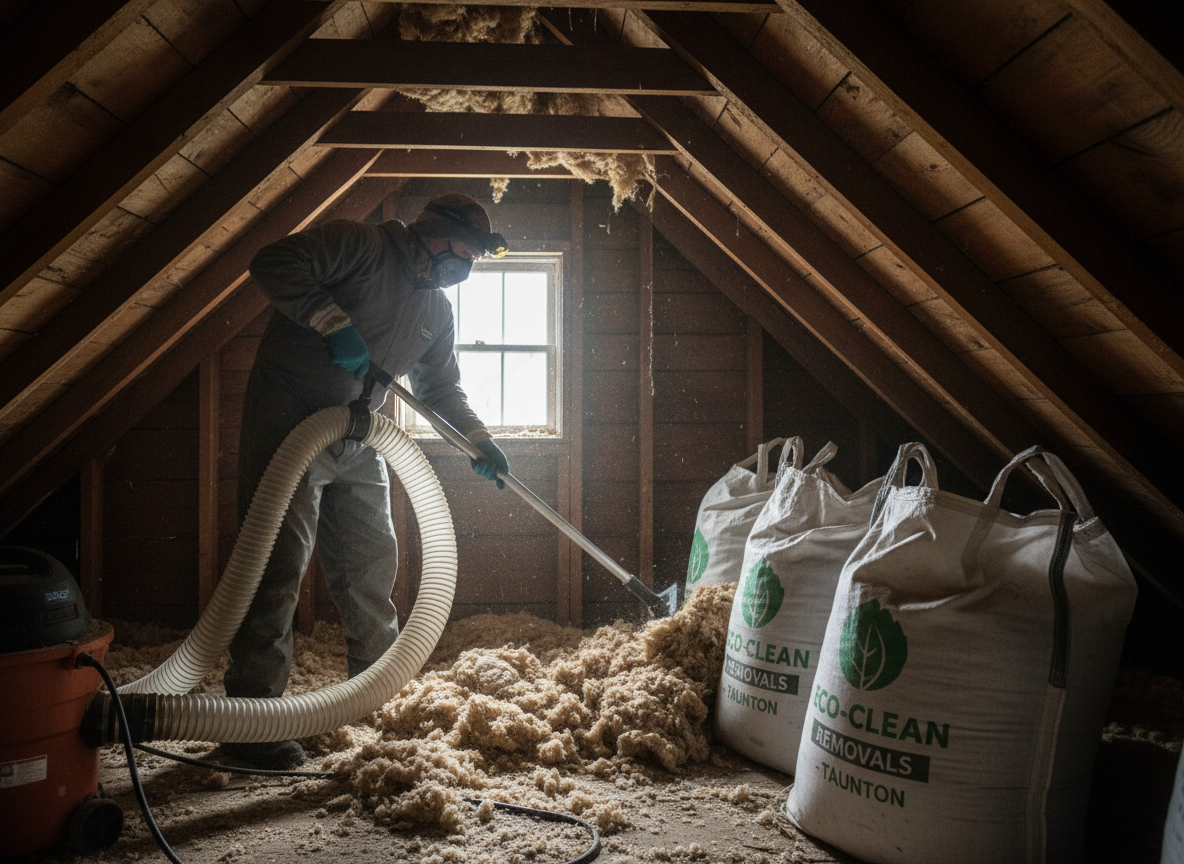
Spray foam insulation installed in Taunton lofts and wall cavities often needs removal when it traps moisture or fails to perform in Somerset's damp climate. Older brick and stone terraces common around the town centre and Staplegrove require careful extraction to avoid damaging original lath and plaster or roof timbers. Environmentally friendly removal focuses on mechanical separation of the foam followed by bagging for specialist recycling rather than landfill disposal.
In properties built before the 1970s, foam frequently bonds to uneven stone or timber substrates, so technicians use low-speed tools and dust extraction to limit airborne particles. Somerset's frequent rainfall means any exposed insulation must be removed before winter to prevent further water ingress through roof voids. The process includes sealing access points with breathable membranes suited to the region's high humidity levels.
Homeowners in Taunton sometimes discover foam during re-roofing or when addressing condensation in converted attics. Environmentally friendly protocols require separating the polyurethane from any timber or masonry so each material stream can be processed correctly. This approach reduces the volume sent to disposal sites and complies with local waste handling expectations for construction materials.
After removal, the void is inspected for hidden damp or rot that commonly develops under failed foam in the Taunton area. Ventilation upgrades are often recommended to suit the county's mild but wet winters, helping prevent recurrence without introducing new chemical treatments.
Technician insight
In Taunton, the thing that catches most people out with environmentally friendly insulation removal is how quickly foam in Victorian terraces traps condensation once the original roof felt starts to fail. Somerset rain gets under the tiles and sits against the foam, so by the time homeowners notice the smell the joists are already softening. We always lift a few boards early to check the full extent rather than assuming the visible section is the whole job.
Staplegrove Terrace Loft
A 1920s terrace near Staplegrove Road had spray foam added ten years ago that began holding moisture. We found saturated joists and mould on the underside of the tiles. The foam was mechanically stripped, materials separated for recycling, and the void left open for drying before new breathable insulation was discussed.
How it works
- 1
Site Assessment
Inspect loft or cavity spaces in the Taunton property to map foam coverage and check for moisture damage.
- 2
Containment Setup
Install dust barriers and negative air units to protect living areas during extraction.
- 3
Foam Extraction
Use mechanical methods to separate foam from substrates while bagging material for recycling.
- 4
Void Cleaning and Inspection
Remove residue, check timbers for rot, and advise on ventilation suited to Somerset conditions.
- 5
Waste Handover
Arrange transport of segregated materials to approved Somerset recycling facilities.
Pricing
Pricing based on property size, foam depth, and access difficulty after on-site inspection.