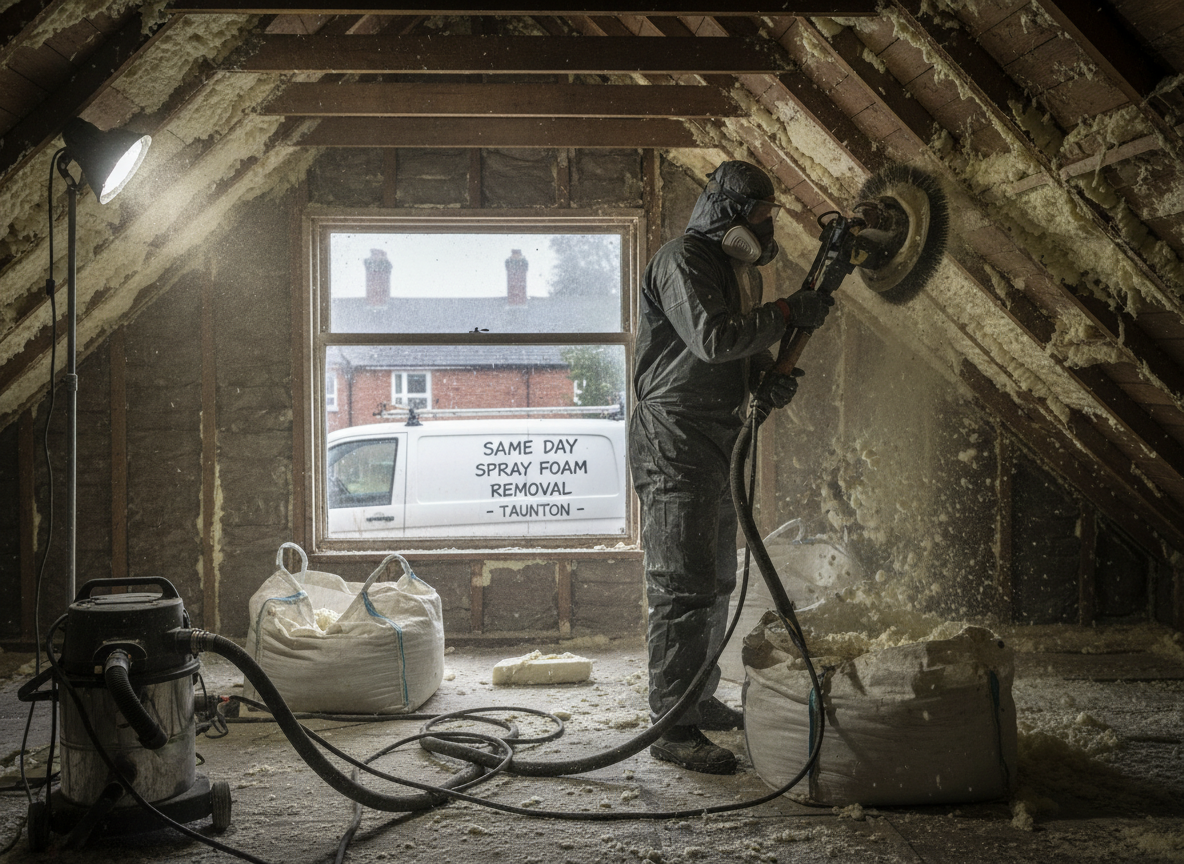
Taunton's older housing stock, especially Victorian terraces near Staplegrove Road and Georgian properties around the town centre, often received spray foam insulation in lofts and under floors during the 2000s. Somerset's frequent rainfall and mild winters allow moisture to become trapped behind the foam, leading to timber decay and mould that only becomes visible once the material is stripped. Removal crews must work carefully around original lath and plaster ceilings and narrow roof voids common in these buildings, using negative air machines to contain dust while cutting back to sound substrate.
Edge cases in the Taunton area include foam applied over electrical cables or in contact with lead flashings on period roofs, where improper removal risks damaging wiring or creating leaks during heavy downpours. Crews check for hidden vents blocked by the foam and restore airflow to prevent future condensation, a step that becomes critical after prolonged wet spells typical of the Quantock and Blackdown fringes. Homeowners sometimes discover that the foam has bridged damp-proof courses in solid-wall cottages, requiring targeted drying before any new insulation is considered.
Regulatory and Safety Notes
Local building control in Taunton expects ventilation to be reinstated to current standards after foam removal, particularly in listed buildings where breathability matters. Always isolate electrics before cutting and dispose of waste through licensed Somerset carriers rather than general landfill.
Technician insight
In Taunton, the thing that catches most people out with same day Spray Foam Removal is how quickly moisture builds behind the foam in unventilated Victorian lofts around Staplegrove and the town centre once winter rains arrive; homeowners often assume the smell is just old insulation when the real issue is blocked eaves that only show after the material comes off.
Loft in Central Taunton Terrace
Owner reported a persistent musty odour after heavy autumn rain. Inspection revealed spray foam sealing off original roof vents in a 1890s terrace. Same-day removal opened the vents, allowed the timbers to dry, and stopped further rot from developing.
How it works
- 1
Site Assessment
Inspect loft, floors and walls to map foam depth, hidden services and any timber damage in Taunton properties.
- 2
Containment Setup
Seal work areas with sheeting and negative air units to protect living spaces from dust.
- 3
Foam Extraction
Cut and remove material in sections, checking for underlying damp or rot as work progresses.
- 4
Ventilation Restoration
Clear blocked vents and confirm airflow meets requirements for the building's age and location.
- 5
Final Clearance
Remove debris, clean surfaces and advise on next steps for the property owner.
Pricing
Cost depends on property age, foam thickness and access difficulty; request an on-site assessment for a clear quote.