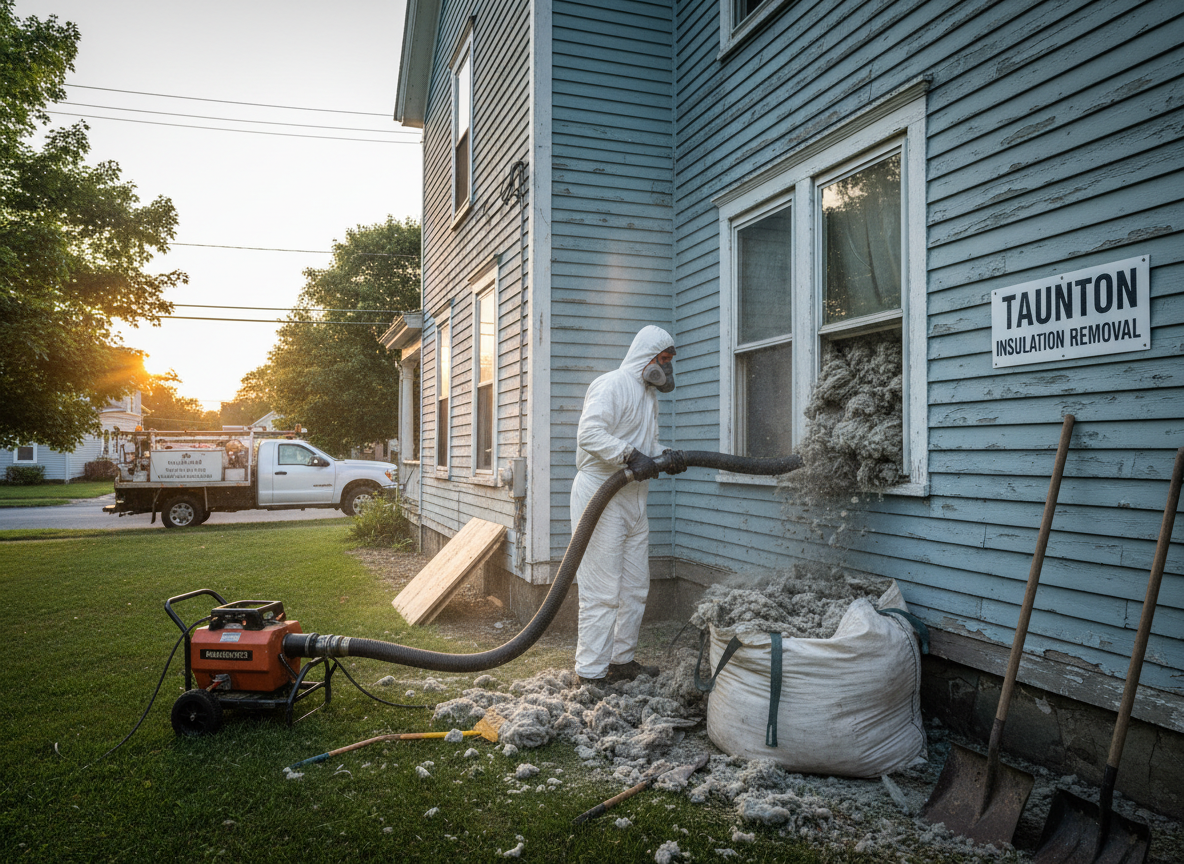
Taunton's Victorian terraces and Edwardian semis around Staplegrove and the town centre often received closed-cell spray foam in lofts and walls during the 2000s energy grants. Over time the foam traps moisture against stone and brick, leading to timber decay that only appears once the material is cut away. Removal crews must work in sections, using negative-pressure tents to keep dust from settling into the rest of the house while separating the foam from lath and plaster without pulling the ceilings down.
Somerset winters bring prolonged rain and high humidity that soaks through any gaps around chimneys or eaves. Once foam is gone, hidden wet patches on rafters become visible and must be dried before new insulation goes back in. Crews check for rot in joists that run parallel to external walls, especially on north-facing elevations where sun never reaches the stone. Disposal skips are positioned on the narrow access roads common in central Taunton so waste can leave the site the same day.
Older properties in the TA1 postcode frequently have mixed insulation layers from previous upgrades. Removing only the foam while leaving mineral wool or polystyrene boards requires careful cutting around electrical cables and pipework that run through the void. After extraction, surfaces are vacuumed and inspected for remaining adhesive residue that could affect new materials. Homeowners receive a written note of any structural concerns found during the work so they can arrange repairs with their own builder.
Technician insight
In Taunton the thing that catches most people out with insulation removal service is how quickly rot appears once the foam comes off the north-facing stone walls in properties near Staplegrove Road. The clay soil and frequent winter rain keep those elevations damp for months, so the timber behind the foam stays wet until we expose it.
Loft foam removal, central Taunton terrace
Homeowner noticed musty smell in the master bedroom after heavy December rain. We found closed-cell foam bonded directly to the rafters with black mould patches along the wall plate. After cutting out the foam in sections and drying the timber, the joists could be treated and the ceiling left ready for new insulation.
How it works
- 1
Site Assessment
Walk the loft and wall voids to measure foam depth and note access points, checking for wiring and pipe locations first.
- 2
Containment Setup
Erect dust barriers and negative-pressure extraction to stop particles migrating into living spaces during cutting.
- 3
Foam Extraction
Slice and peel foam in manageable sections, bagging it immediately for removal from the property.
- 4
Surface Clean and Inspection
Vacuum residue, check timber for moisture or rot, and photograph any issues for the homeowner.
- 5
Final Clearance
Remove all equipment and waste, leaving the space ready for follow-up works or new insulation.
Pricing
Cost varies with property age, foam thickness and access difficulty; site visit required for accurate quote.