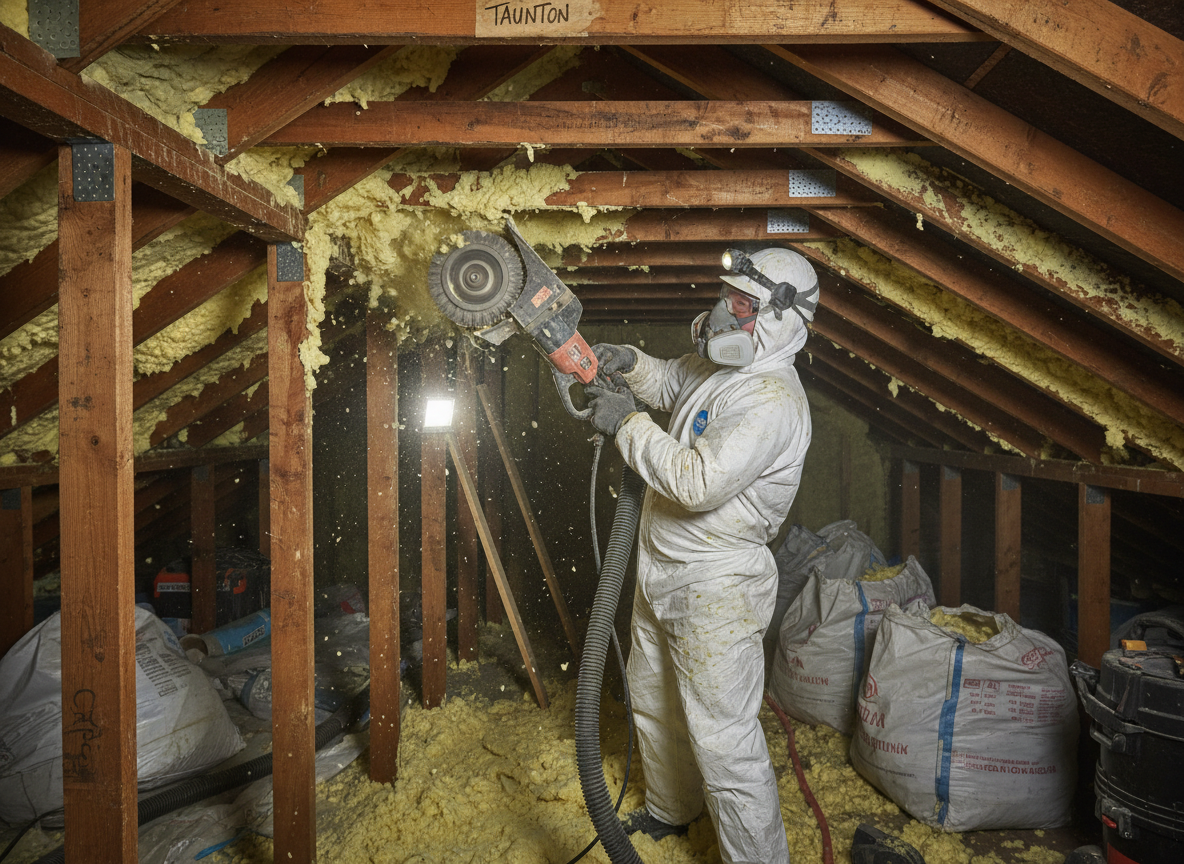
Spray foam insulation in Taunton homes often consists of closed-cell polyurethane applied to loft spaces in Victorian and Edwardian terraces common around the town centre and Staplegrove. Over time this material can trap moisture from Somerset's frequent rainfall, leading to timber decay in rafters and reduced ventilation. Removal requires careful cutting and scraping to avoid damaging original lath and plaster ceilings below while containing dust that can spread through older chimney stacks and party walls.
Edge cases frequently arise in Taunton where foam has been sprayed over electrical cables or around chimney breasts in properties built before 1930. These installations complicate extraction because the foam bonds tightly to irregular surfaces and can hide early signs of rot. UK waste regulations classify removed foam as hazardous if it contains certain blowing agents, so proper bagging and licensed disposal at Somerset facilities is essential rather than general landfill routes.
Weather patterns in the Taunton area affect scheduling because heavy winter rain can increase loft humidity during work, making foam softer and more likely to smear rather than break cleanly. Operators must monitor for hidden water ingress from slipped tiles on pitched roofs typical of the region. Post-removal inspection often reveals the need for new breathable insulation to restore airflow without repeating the original moisture trap.
Seasonal Considerations
Work in Taunton slows during prolonged wet periods when loft access becomes slippery and disposal routes to local sites risk delays. Summer offers better conditions for thorough drying of exposed timbers before any follow-on ventilation upgrades.
Technician insight
In Taunton, the thing that catches most people out with spray foam insulation removal is how the damp Somerset climate combines with 19th-century rafter spacing to let moisture sit trapped against the wood once the foam is in place, so any job here starts with checking for hidden rot before the first cut.
Loft Foam Removal in Staplegrove Terrace
Homeowner in a 1920s Taunton terrace reported persistent loft damp after heavy autumn rain. Inspection showed closed-cell foam applied directly over rafters with no vents, trapping condensation against the timber. We cut out the foam in controlled sections, bagged it for licensed disposal, and opened up original airflow paths. The rafters dried without further decay and the property regained proper loft ventilation.
How it works
- 1
Initial Assessment
Inspect loft spaces in the Taunton property to identify foam type, depth, and any hidden damage to timbers or electrics.
- 2
Containment Setup
Seal off work areas with sheeting to prevent dust migration through older Somerset terrace layouts and chimney voids.
- 3
Foam Extraction
Cut and remove polyurethane layers in sections, bagging waste immediately for compliant Somerset disposal.
- 4
Cleanup and Ventilation Check
Clear residues, inspect for rot, and advise on restoring airflow in line with local housing stock needs.
Pricing
Upfront quotes based on loft size, foam thickness, and access difficulty in Taunton properties.